
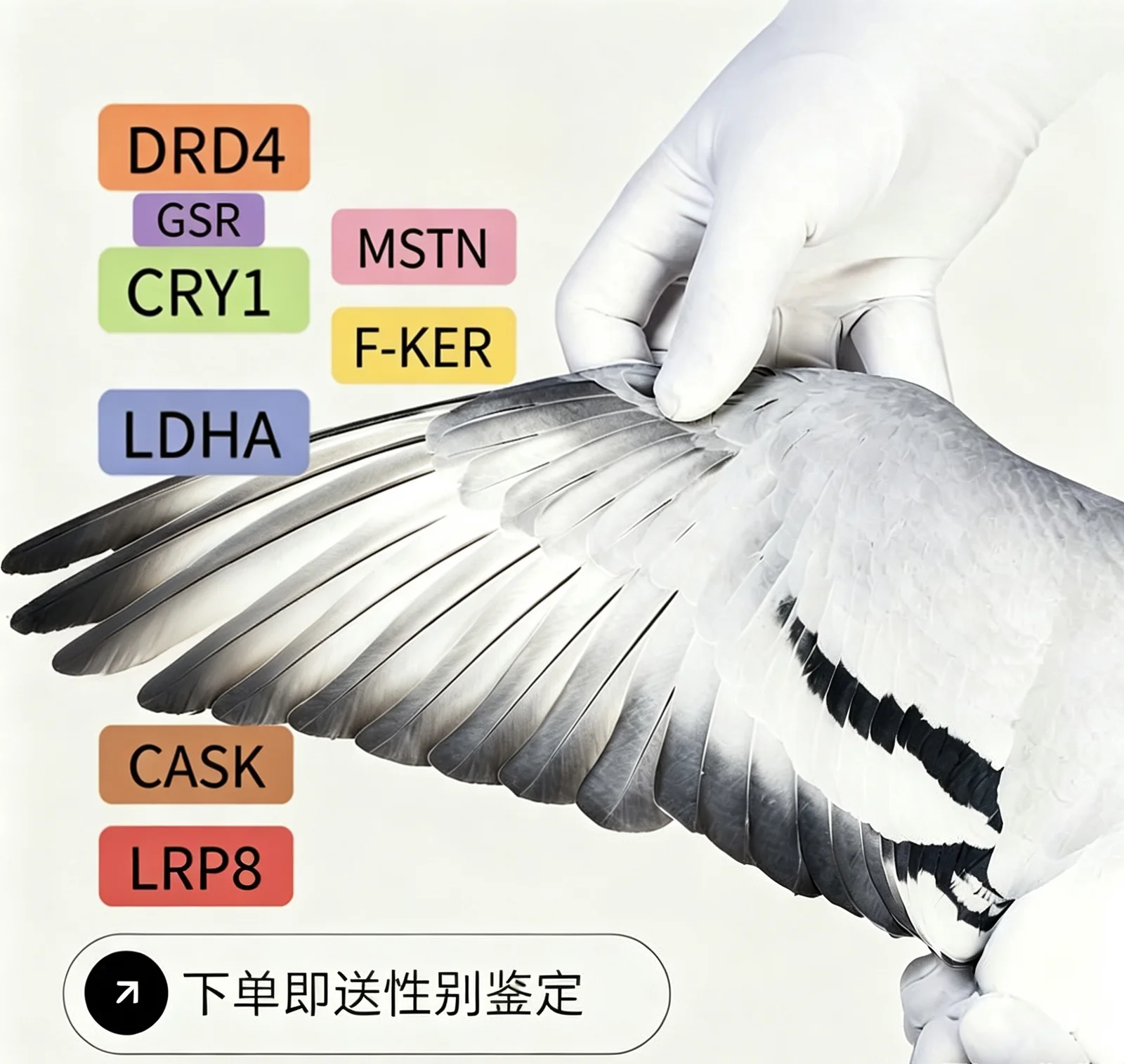
With the development of gene molecular breeding technology, related studies have found that multiple functional genes in racing pigeons are associated with their flight ability. Testing for genes related to elite breeding in racing pigeons helps pigeon fanciers identify advantageous and disadvantageous genes linked to flight performance, offering valuable reference for breeding.
LDHA: Lactate metabolism gene, related to the endurance of racing pigeons during long-distance continuous flight.
MSTN: Myostatin gene, associated with muscle development strength in racing pigeons.
F-KER: Feather keratin gene, related to feather structure and strength in racing pigeons.
DRD4: Dopamine receptor D4 gene, associated with homing ability in racing pigeons.
CRY1: Cryptochrome 1 gene, related to navigation ability in racing pigeons.
LRP8: A gene encoding a protein, involved in synaptic function, learning, and memory.
GSR: GSR gene is related to magnetoreception and is a candidate gene for the racing pigeon's biological compass pathway.
CASK: In skeletal muscle, it participates in the development of neuromuscular junctions.
The report includes results for 8 flight-related genes across 11 loci, plus complimentary sex identification.
Service Process:
1. Wash your hands thoroughly before sampling. Pluck 4~6 feathers and let them air-dry slightly, then place them in a contamination-free plastic self-sealing sample bag. When placing the feathers in the bag, be careful to avoid contaminating the feather roots. Please pluck feathers from the chest and abdomen to ensure the success rate of the test.
2. After placing an order, customer service will contact you within 24 hours.
Feather Collection:
1. Wash your hands thoroughly before sampling. Pluck 4~6 feathers and let them air-dry slightly, then place them in a contamination-free plastic self-sealing sample bag. When placing the feathers in the bag, be careful to avoid contaminating the feather roots. Please pluck feathers from the chest and abdomen to ensure the success rate of the test.
2. Seal the sample bag and use a marker to note sample information on the outside of the sealed bag (e.g., ring number, test items, etc.).
Regarding Feather Sample Collection from Newborn Squabs:
1. Wash your hands thoroughly before sampling. Pluck 4~6 feathers and let them air-dry slightly, then place them in a contamination-free plastic self-sealing sample bag. When placing the feathers in the bag, be careful to avoid contaminating the feather roots. Please pluck feathers from the chest and abdomen to ensure the success rate of the test.
2. Squab down feathers are tiny, so special sample collection tubes are needed for storage and shipping. Please place and pay for your order at least one week before the squabs hatch. We will then send you the sample collection tube kit as soon as possible, so you can collect the down samples on the day of hatching and send them promptly.
3. Upon receiving the squab down samples, we will process and test them immediately. Results will be sent to you within 2–15 business days, allowing you to select your young racers promptly.